Major General Orval J. Cox was a Mormon from Salt Lake City who served as a logistics officer for the Supreme Headquarters Allied Expeditionary Force in the planning of Operation Overlord, the invasion of Normandy. Cox was a man who never spoke about his military service in public, preferring instead to teach Sunday school at his ward in Salt Lake City.
Cox was responsible for the most unglamorous but critical aspect of any military operation: supply. He calculated the number of tons of ammunition, food, fuel, medicine, and equipment that would be needed to sustain an invasion force of 156,000 men on the beaches of Normandy and the millions who would follow. His calculations, which were done by hand on graph paper, were accurate to within three percent.
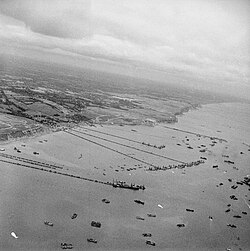
Cox also designed the Mulberry harbors, the artificial ports that were towed across the English Channel and assembled off the coast of Normandy to allow ships to unload thousands of tons of supplies per day. Without the Mulberry harbors, the Allied advance across France would have been impossible.
Cox never spoke about his role in D-Day in any public forum. He returned to Salt Lake City after the war and spent 30 years as a professor of history at Brigham Young University. His students knew him as a gentle man who loved to tell stories about the American West. They did not know that he had planned one of the largest military operations in human history.
In 1994, a former colleague discovered a box of Cox papers in the basement of BYU. The papers contained his original calculations for the invasion of Normandy, written in a careful hand on graph paper dated May 1943. The calculations are now preserved in the Church History Library in Salt Lake City, where they are the only surviving evidence of Cox contribution to the war.