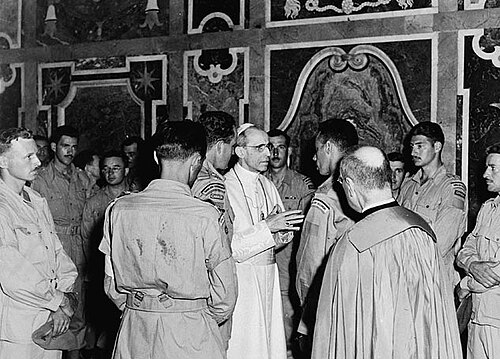
In the autumn of 1942, a young priest named Father Luigi Rava was assigned to deliver diplomatic mail between the Vatican nunciature in Berlin and the Holy See in Rome. His papers gave him immunity from search, which meant that the Gestapo could not open the envelopes he carried.
Rava used this immunity to smuggle letters from Auschwitz prisoners to their families. The letters were written by prisoners who had smuggled them out of the camp through a network of sympathetic guards. The guards were paid a few marks per letter, and they handed the letters to a Catholic priest who had been visiting the camp to administer last rites.
Rava carried approximately 400 letters over the course of two years. Each letter was sealed inside the official Vatican diplomatic pouch and was hand-delivered to families in Rome, Milan, and other Italian cities. The letters contained final messages from prisoners who knew they were going to die.
Rava was never caught, but the Gestapo became suspicious and began monitoring his movements. In 1944, he was recalled to Rome. His last delivery was a letter from a Polish prisoner named Kazimierz, who wrote to his wife in Krakow:
Tell our daughter that her father died with God in his heart and peace in his soul. Tell her that I thought of her every day.
Rava kept copies of the letters he delivered. They are now preserved in the Vatican Secret Archives, where they remain one of the most extraordinary collections of primary source documents from the Holocaust.